The Ultimate Laundry Reset: How to Revive Your Workout Gear & Linens with FEBU
Ever pull a fresh pair of gym leggings or a towel out of the dryer, only to notice a weird, lingering “funk” the second it warms up against your skin?
You’re not alone. Regular laundry detergents are great at washing away surface dirt, but they often leave behind body oils, sweat residue, and microscopic biofilms trapped deep in synthetic fibers.
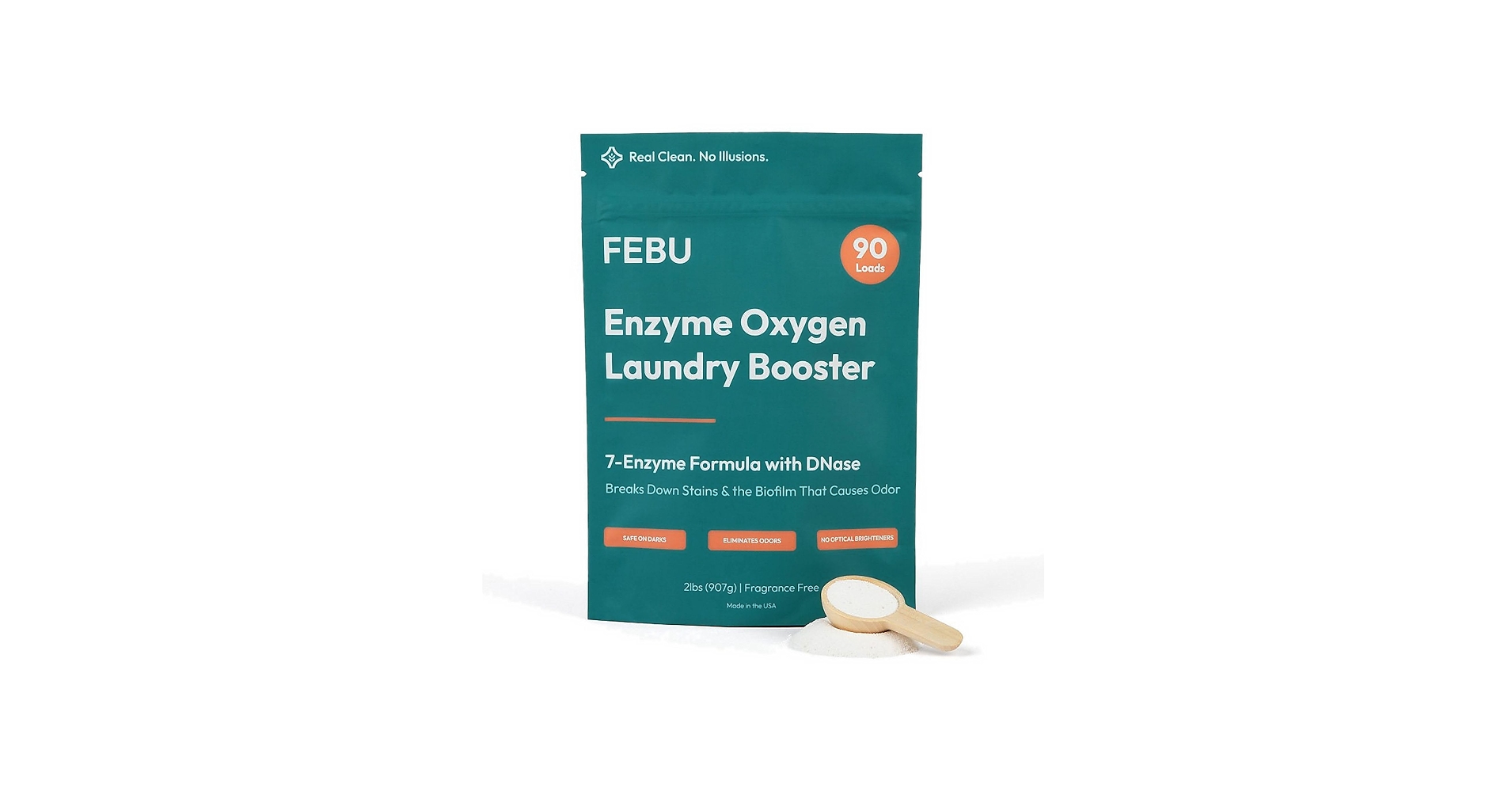
Enter FEBU Enzyme Oxygen Laundry Booster—a heavy-duty booster that pairs with your favorite detergent to eliminate what normal soap misses. Here is your friendly guide on how to use it like a laundry pro, plus the breakdown on using it alongside heavy hitters like citric acid and ammonia.
How to Use FEBU Laundry Booster (Step-by-Step)
1. Everyday Loads & Heavy Soil
FEBU works with any detergent and any machine type (HE or standard top-loader).
-
Where it goes: Toss the powder directly into the washer drum before throwing in your clothes. Do not pour powder booster into the liquid detergent drawer!
-
How much to use:
-
Standard HE Load: 1 scoop (~10g).
-
Large, XL, or Heavily Soiled Load: 2 scoops.
-
Top-Loaders (Non-HE): Add an extra ½ to 1 scoop to account for the larger water volume.
-
-
Water Temp Matters: Use warm water (100°F–105°F) or hot water (120°F+). The warm water activates the oxygen bleach and allows the 7-enzyme blend to break down organic stains and odors effectively.
-
Cold Water Tip: If washing dark workout clothes in cold water, pre-dissolve your FEBU scoop in a cup of warm water before pouring it into the drum!
2. The Deep Laundry Reset (For “Un-Washable” Gym Gear)
Got gym shirts or towels that smell musty no matter how many times you wash them? Try a Deep Soak:
-
Bucket Method: Dissolve 1 scoop per gallon of warm water in a sink or basin. Submerge your items for 1 to 6 hours (overnight is safe for most fabrics).
-
Finish the Wash: Throw them into your machine with your regular detergent and run a normal wash cycle.
⚠️ Fabric Safety Warning: Never use FEBU on wool, silk, down, or leather. FEBU contains natural proteases (enzymes) that digest proteins—which is amazing for sweat and grass stains, but bad for animal-based natural fibers!
Can You Mix It with Citric Acid or Ammonia?
If you like to experiment with laundry hacks, you might be wondering how FEBU plays with other common additives. Here’s the breakdown:
1. Citric Acid: YES (When Used in Different Cycles)
Citric acid is a fantastic natural rinse agent that removes soap scum and hard water minerals.
-
The Rule: Don’t mix citric acid and FEBU together in the main wash. FEBU requires an alkaline environment to work, and the acid will neutralize the oxygen bleach.
-
How to do it right: Put FEBU in the drum at the start with your detergent, and put your diluted citric acid solution into the fabric softener compartment. Your machine will automatically dispense the citric acid during the final rinse cycle!
2. Household Clear Ammonia: PROCEED WITH CAUTION
Some laundry enthusiasts use diluted clear household ammonia alongside boosters for a nuclear-level “Rehab Wash” on heavy grease or oil buildup.
-
Safety First: NEVER mix ammonia with chlorine bleach. FEBU uses oxygen bleach (sodium percarbonate), which is safe with ammonia, but you must make 100% sure there is no chlorine bleach anywhere in your load or dispenser.
-
How to use safely: Add household clear ammonia during the main wash along with your detergent, place FEBU in the drum, and always run an extra rinse cycle. Ensure your laundry room is well-ventilated!
Summary Checklist for Perfect Laundry
-
Add FEBU directly to the drum.
-
Use warm or hot water whenever possible.
-
Keep citric acid in the rinse cycle drawer.
-
Keep FEBU away from wool and silk.
Related Posts
2026-06-13
2026-06-07
2026-08-03