Life After the Steering Wheel: My Favorite Safe-Driving Sci-Fi Scenarios
Future Scenario 1: The Multi-Vehicle Cargo Pipeline
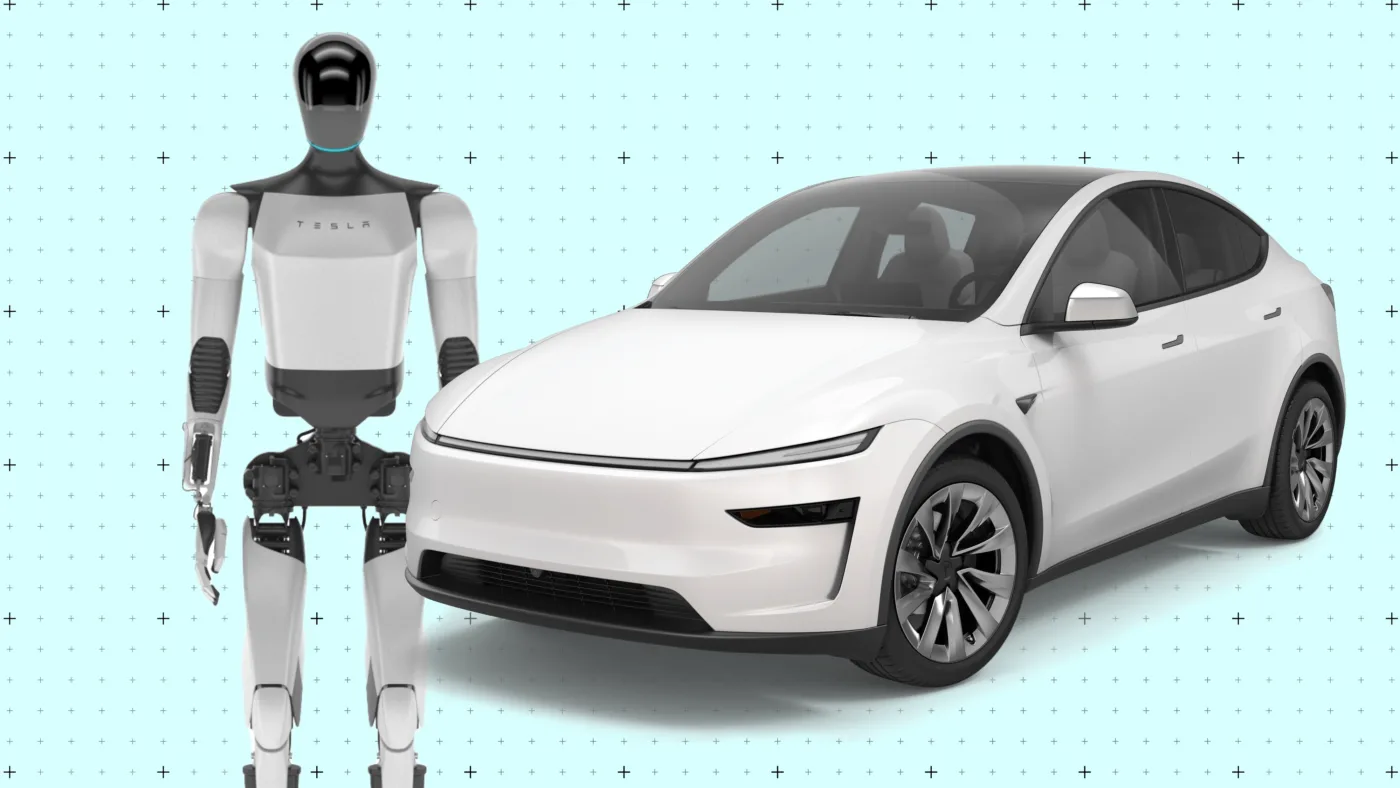
When you look at the new Model Y L, it’s a massive win for passenger legroom, but physics still wins on the trunk space if you’re hauling six adults. But what happens when the software evolves past needing a human driver in the front seat?
Imagine going on a big family road trip. You, the kids, and the grandparents are cruising comfortably in one Model Y L. Meanwhile, right behind you, a second, completely empty Model Y is locked onto your car, following you like an autonomous trailer packed to the brim with everyone’s luggage. You’ve completely solved the cargo problem without crowding the family.
Future Scenario 2: The Asynchronous Fetch Quest (And Forgotten Margaritas)
We’ve all been there: you get twenty minutes down the road, finally settle into the drive, and the realization hits you like a brick. Just the other weekend, I whipped up a fresh, perfectly balanced batch of squeezed margaritas for a party, walked out the door, and left the entire container sitting right on the kitchen counter.
In a fully mature self-driving world, that’s no longer a ruined evening; it’s just a quick task for the car. You simply tap a button on your phone to send the car back to your house. While you’re at the party catching up, the car arrives in your driveway. Someone at home—or down the line, an Optimus robot—grabs the container from the counter, pops the trunk, puts it inside, and closes it. The car then drives itself right back to the party.
Future Scenario 3: Monetizing the Downtime
Right now, cars just sit idle in dark driveways or blistering office parking lots 90% of the day, doing absolutely nothing but losing value.
True autonomy completely changes how we think about owning a vehicle. When I’m clocked in at work, or sound asleep at 2:00 AM, my car shouldn’t just be taking up space. With a quick toggle in an app, it can go into active service as a robotaxi. It spends its downtime making a little extra money, shuttling people around town, and then automatically returns to its charging spot right before my morning alarm goes off. The car pays for itself while you sleep.
Future Scenario 4: The End of the Parking Lot Grind
Think about the sheer amount of time we waste just circling crowded parking lots or concrete garages looking for an open slot. It’s an absolute headache.
With advanced summon and banish features, the entire concept of looking for parking vanishes. You pull up directly to the front entrance of a busy restaurant or stadium, step out, and tell the car to go away. It doesn’t need to park near you. It can instantly go pick up a fare nearby to make a few bucks, or it can drive itself to an out-of-the-way staging lot miles away. When you’re ready to leave, you just call it back, and it materializes at the curb.
Future Scenario 5: Self-Handling Maintenance
Nobody actually likes taking their car in for service. Instead of you noticing a weird tire wear pattern, booking an appointment, and wasting a Saturday morning sitting in a boring customer lounge, the car will just handle its own upkeep.
If the car detects a worn tire or needs a new cabin air filter, it takes care of it while you sleep. At 3:00 AM, the car wakes up, backs out of the garage, and drives itself to an automated service center. It gets the work done, pays the bill using your account on file, and returns to your garage before you even wake up. You’ll never have to wait around a greasy service bay again.
Future Scenario 6: Shifting the Daily Commute
Right now, the daily commute is just wasted time. You are locked in place, staring at brake lights, and reacting to bad drivers. It’s stressful and drains your day.
When you no longer have to keep your eyes on the road or hands on the wheel, the car transforms into a private mobile office or relaxation space. Your workday could start the second you step into the driveway. The cabin can set up a workspace, adjust the temperature, and let you reply to emails, write, or run morning sync meetings while the car smoothly handles the highway. By the time you pull up to the office, you’ve already knocked out your first two hours of work.
Future Scenario 7: The Car as a Power Node
A vehicle with a massive battery sitting idle in your driveway is a massive untapped resource. In the future, your car will be smart enough to make decisions about energy consumption to save—and make—you money.
Through smart home integration, the car can constantly monitor electricity pricing. During peak afternoon hours when the local power grid is sweating under high demand and power prices surge, the car can feed electricity back into your home or the grid, selling it at a premium. Then, in the dead of night when electricity prices drop to next to nothing, it pulls power back down to top itself off.
Even better, it acts as a massive backup battery for your house. If the local grid fails and you get hit with a blackout, the car seamlessly switches roles, feeding power directly back into your house to keep the AC running, the fridge cold, and the lights on without missing a beat. Your driveway essentially becomes a tiny, profitable power station and an emergency generator rolled into one.
Future Scenario 8: The Autonomous Family Chaperone
Coordinating family logistics often feels like a second job—you’re constantly trying to balance work schedules, school drop-offs, and afternoon activities without falling behind.
True autonomy introduces a completely trusted helper for the family. Instead of rushing out of a work meeting to handle a cross-town pickup, you can send the car to handle it alone. The vehicle drives to your kids’ school or sports practice, unlocks only when it securely recognizes them, and safely locks down the cabin for the ride back. Using the internal cameras, you can easily check in on them from your phone while finishing up your day. It completely removes the stress of the afternoon pickup window.
Future Scenario 9: Zero-Friction Dinner Delivery
Right now, ordering food delivery means paying high service fees, dealing with cold food because the driver got lost, and waiting for someone to drop off a bag at your doorstep.
When you couple full self-driving with robotics, the entire delivery pipeline becomes automated and frictionless. You order takeout from your favorite spot across town, and instead of a gig worker picking it up, a specialized, unmanned delivery vehicle or a robotaxi pulls up to the restaurant. The kitchen staff places your fresh, hot food inside a climate-controlled compartment. The car routes itself flawlessly to your house.
When it arrives, you don’t even have to walk out to the curb. An Optimus robot attached to the local delivery fleet—or even your own personal robot—steps up, opens the vehicle storage, grabs your order, and walks it right up your driveway straight to your door. Dinner arrives hot, fast, and completely untouched by human hands.
Future Scenario 10: The Ultimate Safety Net and Senior Independence
When a person loses the ability to drive safely due to age or medical reasons, they often lose a massive piece of their freedom. They suddenly become entirely dependent on family members or crowded shuttle services just to go to a routine doctor’s appointment, grab groceries, or visit a friend.
True autonomy restores that independence entirely. A senior citizen living alone can simply step into their car, state a destination, and let the vehicle handle the complexity of the road flawlessly—no driver’s license required.
Beyond daily freedom, it changes the game for emergency situations. If you live alone and experience a sudden medical emergency—like severe chest pains or a deep cut—you are no longer stranded waiting for an ambulance to find your address. Through integration with a smart watch or a quick voice command, the car can automatically back out of the garage, pull up to your front door, unlock the cabin, and route you directly to the nearest emergency room. While you’re en route, it can alert the hospital of your ETA and medical data, and ping your emergency contacts. It transforms your vehicle from an idle machine into a proactive, life-saving safety net.
Future Scenario 11: Transporting vs. Transportation
There is a big linguistic shift when steering wheels disappear: cars stop being a tool of transportation (a machine you physically operate) and start being a vehicle that transports you while you live your life.
Instead of treating the drive as a dead-time void where you are locked into looking at bumper stickers, the trip becomes invisible. You enter the cabin, lock into whatever you care about—spending time with family, enjoying entertainment, or resting—and wake up at your destination. When the act of driving is removed, moving from Point A to Point B feels less like travel and more like teleportation.
Future Scenario 12: The Mobile Bistro & On-the-Go Productivity
Trying to eat in a traditional car is an awkward nightmare—balancing a hot meal on your lap while steering with one knee, or sitting parked in a crowded drive-thru parking spot wasting 20 minutes of your day.
In an autonomous cabin, “eating on the go” transforms into a seamless, highly productive experience. With no steering wheel or pedals in the way, the cabin rearranges into a private mobile dining room. You can sit back, pull out a full meal, use both hands, and enjoy lunch at 65 MPH without taking a single second away from your schedule. Even better, you can pair lunch with focus time: catching up on an executive brief, reviewing code, or taking a video call on the main display while you eat. What used to be dead, wasted travel time becomes a double-win of nourishment and task completion before you even reach your destination.
Future Scenario 13: Eliminating the Human Factor (The Ultimate Benefit of Unsupervised FSD)
Let’s talk about the absolute holy grail of autonomous driving: completely removing human error, distraction, and impairment from the road. Every single year, thousands of lives are lost to driving under the influence, falling asleep at the wheel, or a split-second glance down at a text message. We try to solve it with traffic laws and driver-monitoring chimes, but as long as a human is required to react in milliseconds, the risk remains.
True, unsupervised FSD completely changes the stakes. It turns a vehicle from a potential liability into a safe haven. Imagine being out late enjoying a few drinks with friends, or driving home after an exhausting 14-hour workday where your eyes are heavy. Instead of rolling the dice or dealing with unreliable rideshares, you simply get into your own car and relax.
The software doesn’t get tired, it doesn’t get distracted by phone notifications, it has zero blind spots, and it doesn’t care if you’ve had a few drinks. It executes the drive with the exact same flawless, cold precision at 3:00 AM as it does on a clear Sunday morning. By shifting driving responsibility entirely from human biology to mature AI, we don’t just make travel convenient—we eliminate the primary causes of road fatalities overnight.
Check out Cybercab | The Future is Autonomous to see how autonomous vehicle design visions highlight point-to-point transport without manual driving controls.
This video provides an official overview from Tesla showcasing the concept of autonomous point-to-point transit and how removing human control changes mobility.