Why I Like and Follow Tesla (And It’s Not for the Reasons You Think)
YouTube Video: Tesla RoboTaxi - Unsupervised FSD in Austin, Texas
Let’s get one thing out of the way immediately: I don’t own a Tesla. And if I eventually buy one, it won’t be because I’m an Elon fanboy, nor because I’m fiercely loyal to the brand itself. As a technologist, I care about systems, efficiency, and engineering. Even from the sidelines, the reality is simple: the tech inside these machines is incredible, and I’ve just been waiting for the right hardware configuration to come along.
Right now, I need a vehicle that can comfortably fit my entire family, grandparents included. So when the Model Y L finally dropped in the US, it immediately caught my attention. The extra legroom is exactly what we need, but I still have one massive reservation: trunk space.
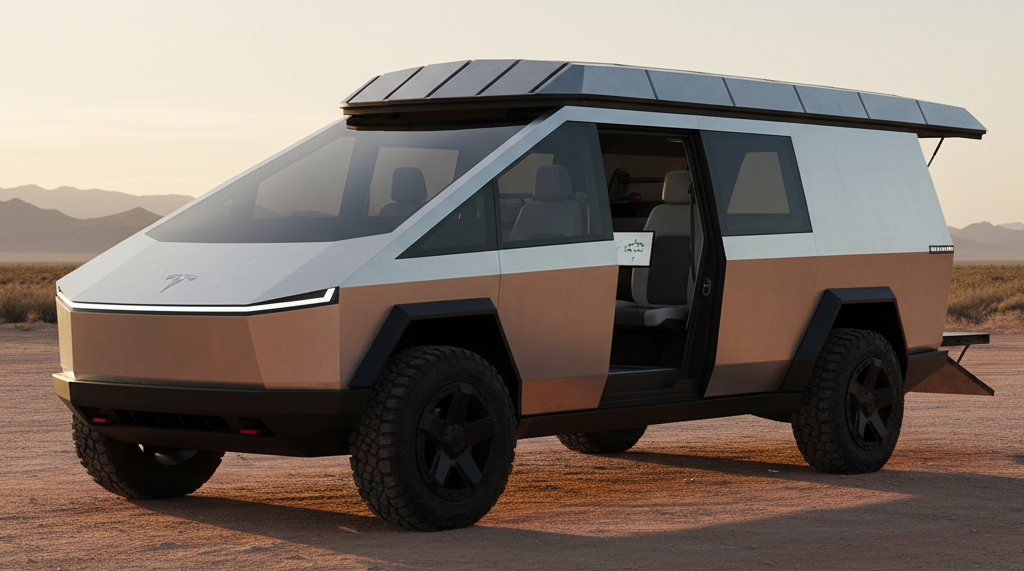
When you have six people in a vehicle, you aren’t just carrying passengers—you’re carrying their luggage. If we take a family trip, squeezing bags for six adults into the remaining space behind a deployed third row becomes a high-stakes game of cargo Tetris. Frankly, a stretched crossover still forces a compromise. C’mon, Tesla, let’s get a proper Cybervan already. Give us a dedicated, geometric people-mover with massive vertical cargo space and zero friction.
But while the form factor hasn’t fully solved my exact household layout yet, it doesn’t make me appreciate the underlying technology any less. For me, experiencing this software in the real world has been the realization of a childhood dream.
From Sci-Fi to Reality
When I was growing up, I used to devour issues of Popular Science and Popular Mechanics. I’d stare at the retrofuturistic covers and illustrated articles of a high-tech tomorrow, completely captivated by the concept of self-driving cars, and I was in absolute wonder. Even back in the ’80s and ’90s, I fundamentally believed that electric cars were the future and would ultimately save our environment.
But back then, looking at the limitations of the era, a practical EV just didn’t seem truly possible. Batteries were heavy and inefficient, infrastructure was nonexistent, and the few experimental prototypes that did surface felt more like oversized golf carts than the future of transit. And don’t even get me started on the GM EV1—that whole saga of launching a working EV only to recall it and literally crush them all in the Arizona desert is a corporate conspiracy rathole you can get lost in for days.
Because of that era, the idea of a vehicle navigating the world entirely on its own—while running cleanly on electrons—felt like pure science fiction meant for a distant generation.
I still can’t quite believe that I’m seeing this happen in my lifetime. My first real taste of it was a quick, 30-minute demo drive. I was absolutely amazed when the car seamlessly took us straight through major, chaotic construction roads without missing a beat. That short window completely rewired my expectations of what modern AI could do.
To see what life would actually be like with this ecosystem integrated into our routine, I booked an extended 48-hour demo. Living with the car for two days solidified it: it’s a mind-blowing piece of software and sensor engineering.
The Ultimate Stress Test
The real confirmation of what this technology could handle came during a solitary trip back home to Florida. My mother had passed away, and I went back alone to spread her ashes. It was an incredibly heavy trip, and the last thing I wanted to worry about was navigating traffic or managing the stresses of the road.
I rented a Tesla to handle the logistics, and across four full days of driving, I barely even touched the steering wheel. The automation handled the highways and city streets with an eerie level of precision, giving me space to just breathe and process.
The only time I actually had to step in and take over was at the very end of the trip when I arrived at my parents’ house. Because the area wasn’t a highly detailed or clearly defined parking location, the software hit its limits, and I had to intervene to physically find a parking spot and put the car away. But honestly, having to take over for the final fifty feet after the car handled hours of highway and city navigation flawlessly didn’t diminish the feat. It just showed me exactly where the current boundary line sits.
View from the Minivan
These days, I find myself looking at the ecosystem from a different perspective. I’ll be driving along in my Toyota Sienna, glancing over at people in their Teslas, trying to spy on their dashboards to see if they are actively using FSD.
When I see the software driving for them, I get a massive wave of jealousy. But when they aren’t using it, I’m honestly bewildered—why are you manually driving when you have that pipeline running right under your hood? Then again, as a technical person, I get it; I like to take over the controls sometimes just for the pure experience of the drive. But it’s easy to see the writing on the wall: manual driving is fast becoming the exception rather than the rule for the future.
When you break it down, it’s a simple limitation of biology versus processing power. As humans, we only have two eyes. We have blind spots, we look away, we blink, and our brains take a fraction of a second just to register a threat. Worse than that—we have messy runtime states. Humans get tired, we carry emotional baggage into the cockpit, we experience anger and road rage, we get sleepy, and we get aggressively DISTRACTED.
Tesla vehicles, on the other hand, run an array of overlapping eyes covering $360^\circ$ simultaneously. The computer doesn’t care about a bad day at work or a text notification. It doesn’t blink, it doesn’t experience fatigue, and the perception-to-action pipeline calculates edge cases in milliseconds—reacting faster than a human blink before a human brain could even register that an obstacle exists.
The Beauty of a Frictionless System
Beyond the AI, what draws me to the platform is how brilliantly engineered the user experience is. The cars are minimal and clean. There’s no unnecessary clutter, no overwhelming array of physical buttons—just a streamlined, intentional design.
As someone who manages complex technical environments, I naturally appreciate any system that deliberately removes friction. The daily conveniences are unmatched:
-
True Frictionless Entry: You just walk up, the car handles the access, you sit down, and it goes. No digging for keys, and no push-button ignition. When you arrive, you just walk away and the system shuts itself down.
-
Complete Environmental Awareness: The high-tier camera arrays and autonomous tracking take all the pain out of tight spaces.
-
Zero Maintenance Friction: The idea of no longer scheduling oil changes, waiting around in greasy service bays, or managing routine mechanical upkeep is incredibly appealing. It just runs.
Ultimately, I look at the platform the same way I look at a great piece of software or a perfectly optimized pipeline: it’s clean, it’s highly automated, and it makes life remarkably simple. I’m just keeping my eyes on the horizon for the vehicle that can hold the whole crew and all their gear.
Related Posts
2026-06-24